High Comedy

As abrasive, ugly and, I guess, pretty comical  public debate has become these days (although it’s probably always been such, visibility being exacerbated by our competitive media outlets) maybe it’s time to extol the virtues of the high energy levels our contentious philosophical exchanges generate. However distasteful, things are certainly better than the situations censorious political structures in other parts of the world impose on their populations.

Still, I have to question motivations sometimes. I’m afraid rather than championing fairness and what’s best for all, it appears, often, the primary concerns center on me and mine, my own situation and how it measures up to what I see around me; seems like arrested development sometimes; a perpetual adolescence.

The 19th century philosopher John Stuart Mill reminds us that in any debate, both positions will contain a certain degree of truth; issues are never simply black and white. So, it’s up to us all, I guess, to try to make reasonable sense of the oppositional view rather than mindlessly rely on logical fallacies, strawman simplifications and ad hominem put-downs to bind us with our allies and reinforce what we wish to be the right and only view.

As I contemplate these ideas I’m fully aware of my own complicity, my own inclination to jump on my preferred band wagon, you know, thumb my nose at the opposition. But, at least it gets my blood pumping, raises the old energy level; better than wasting away in lethargy ville I suppose.

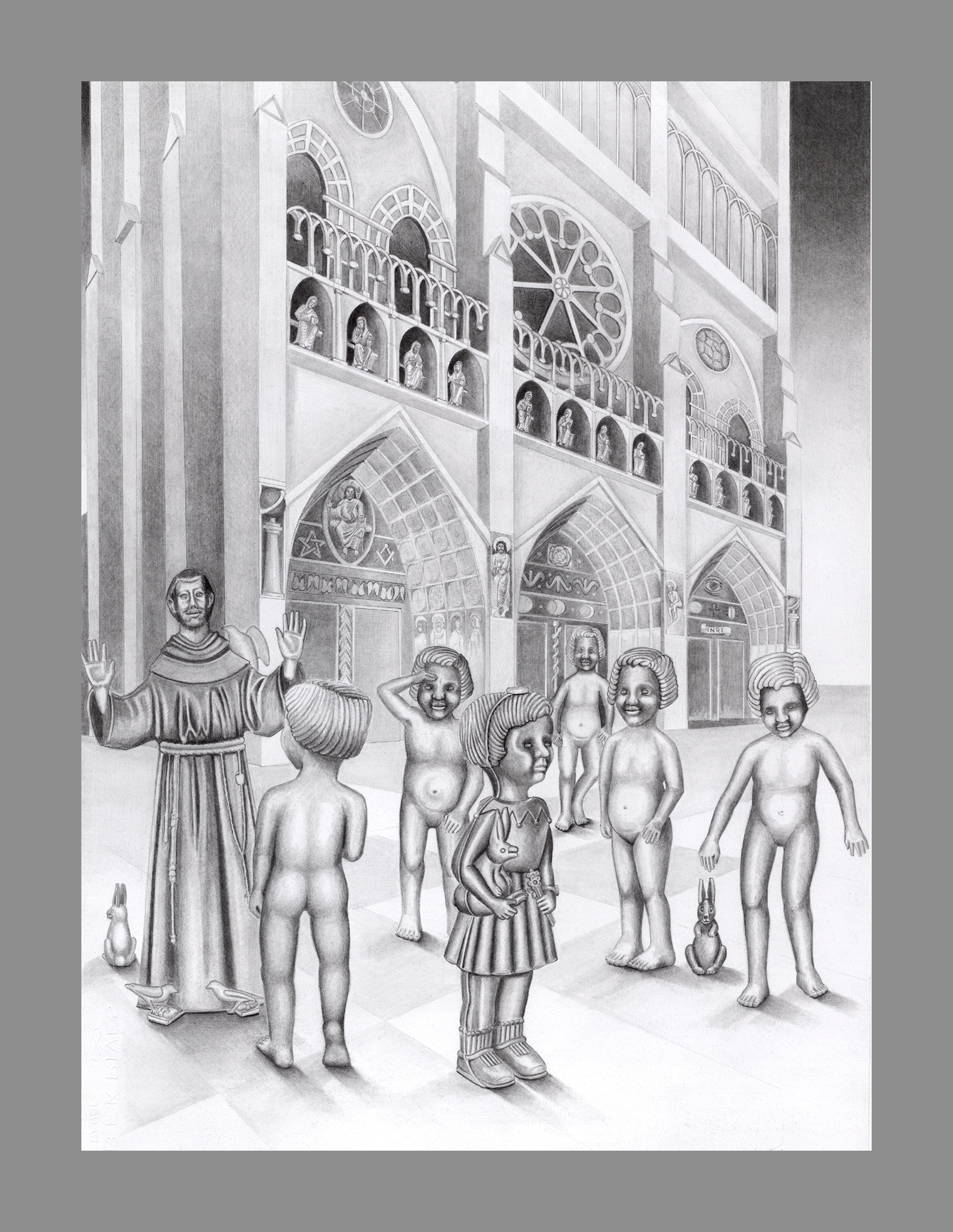
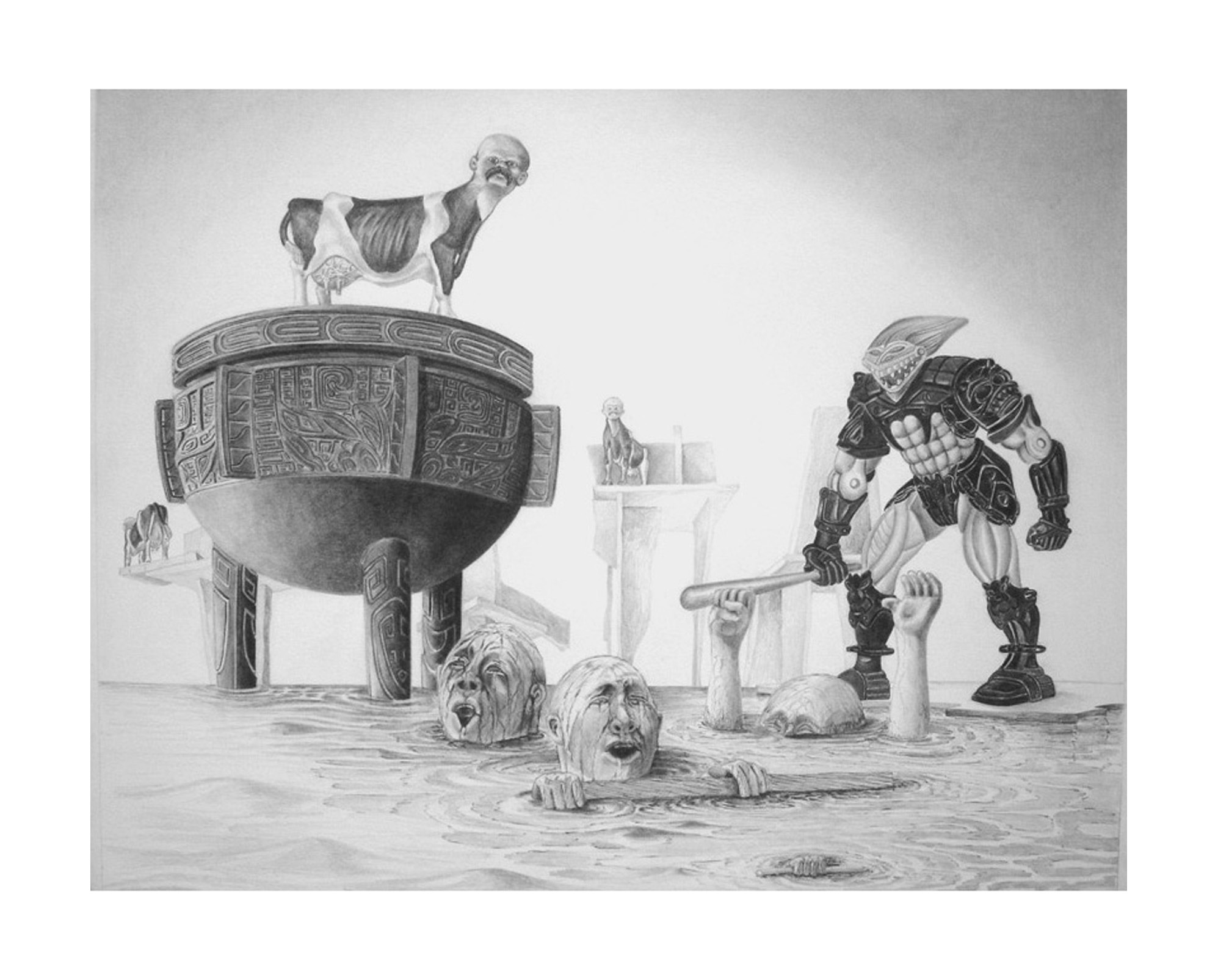
ship of fools


Limbo

I seem to be existing, these days, in a state of limbo, not knowing, when I awake in the morning, whether the weather demands long johns or permits short sleeves. Well, it’s not just the weather. It’s also the whether, loose ends and multiple mental directions that have interrupted my normally productive routine.

I understand that, theologically, Limbo has a lot to do with Original Sin. It is, I guess, a place reserved for those who, having given up the ghost but who haven’t had the opportunity to participate in those actions necessary to ensure residence in either the heavenly realm or The Deeps, must go to wait awhile. Maybe a long while, so I understand.

I don’t see the limbo I’m experiencing to be quite so serious. I’m pretty sure I’ll snap out of it soon. Maybe when the weather improves so I can spend more time outside I’ll be able to pull myself together.

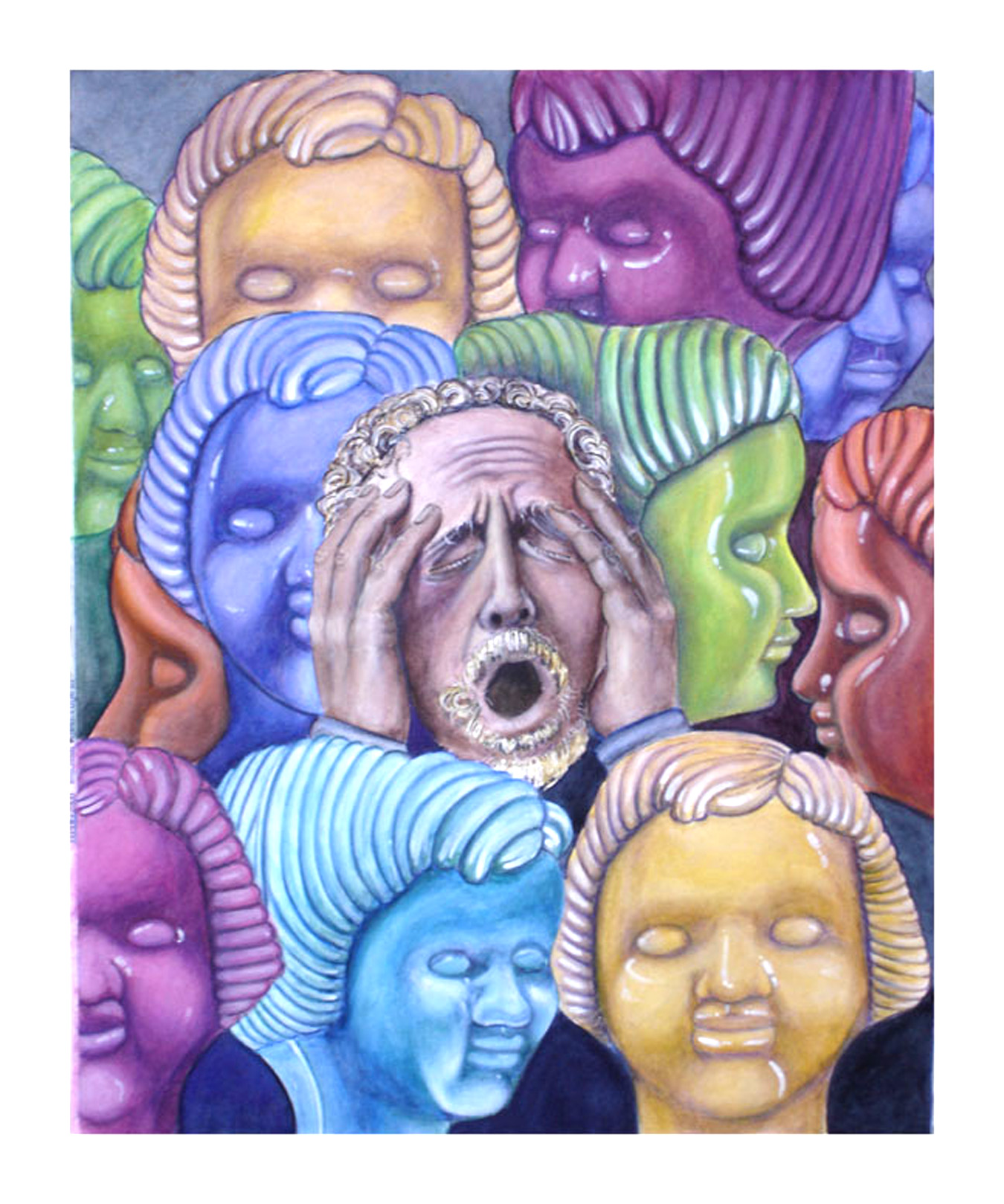
dreamsoffreedom4


An Aversion to Heat

I’ve found myself, lately, inextricably rooted in a mindset of cynicism that I think may be due to being in the heat of these southern climes where I am temporarily residing.

Cynicism is not foreign to my nature by any means but it seems to have assumed a stronger grip on my thought processes these days as I endure temperatures in the 80’s and 90’s. For example, when I see all the elderly individuals down here, plodding along on their walkers or holding up traffic in their golf carts, rather than commiserate, I am drawn to thinking that their migration to these sunny climes is but preparation for their soon to experience date with the crematory oven.

And then there’s the ubiquitous border patrol’s insidious presence on the roadways seeking to intercept any illicit Hispanic migrants who might be crossing the border looking for honest work. And this is not to mention the legions of homeless individuals on bicycles, pulling wagons containing all of their worldly belongings, sleeping in the parks while being ignored by a government adverse to social provision of any sort.

Anyway, I’m thinking it may just be the heat that has me so off-center; it may be time to proceed north to cooler climes and a more compassionate perspective.

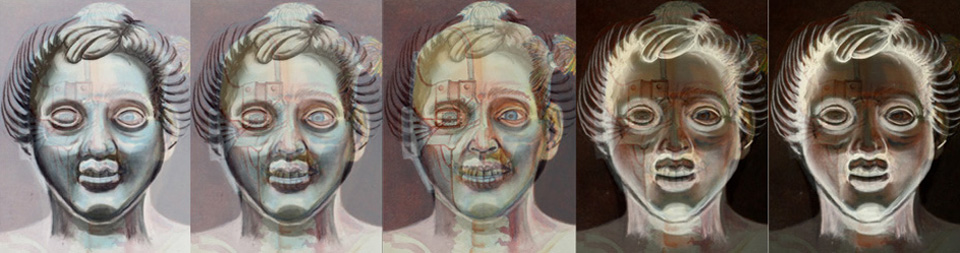
meditationdevice11

Populism

I’ve been trying to make sense of the term populism which has been in the news so much lately. I’ve always thought being popular meant acceptance by a large segment of people-the populus, I guess.

I’m familiar with the idea of popular culture: art forms like comic books, easy listening music, feel-good movies, reality TV and such that are easily accessible to many. On the surface, it sure seems like popularity ought to be a good thing.

But, whereas one might suppose populism might be about bringing everyone together in support of the common good, what it appears to really be about is dividing and conquering. I guess, when it comes down to it popularity generates the ‘Other’. In popular culture the ‘Other’ is the antiquated or out of style, in religion, those on the wrong path. In the political realm a populist seeks to gain popular support often times by demonizing those less virtuous than his own constituency, who are characterized as in opposition to the traditions and values so dear to his followers.

Given the disparate values –realities, really-of so many, I guess it’s probably unreasonable to expect wide spread agreement about political or religious issues. Still, it does seem reasonable to assume that everyone should be in favor of seeking the common good.

near vilnius 3

The Seven Deadly Sins

I’ve been thinking about the goings-on in the political realm, lately, in terms of the seven deadly sins the fourth century church fathers saw fit to impose on their faithful practitioners. I suppose those early church leaders may have been thinking of the moral health of the people, at least to some degree, while imposing a social order that was disregarded under penalty of mortal oblivion.

It appears the current flock are not as concerned about sinful mortality as they might have been centuries ago considering what appears to be widespread desires for more, more, more, material excesses and gluttonous consumption while basking in the vegetative state.

But, it seems to me these indiscretions are pretty minor compared to the behaviors of some of those seeking public office these days. What it all appears to come down to is hubris of monumental dimension, which, if we are to give credence to Dante, who gave this issue considerable thought, placed the prideful in the deepest bowels of his Inferno. Not scary anymore, I guess.

Oneness

I’ve been trying to make sense, lately, of the philosopher Arthur Schopenhauer’s concept of ‘Will’. As far as I can tell, rather than connoting the generally held understanding of the term as having to do with conscious desire, mood swings or self-awareness, ‘Will’ for Schopenhauer is the non-living force, the undifferentiated, timeless, space less, noumenal Oneness from which all differentiated phenomena (including us) is manifest. This means, I guess, that we all share a common origin that may account for our moral proprieties, compassion and fellow-feeling.

Well, as I was contemplating this recently during a three hour flight, the beauty of the idea really hit home. I found myself in an aisle seat in the last plane row right next to the rest rooms. After drinks were served a flow of humanity descended upon me, enveloping me in what I can only imagine must be very much like the primordial ‘Will’ in which we all swam and to which we will return.

I must say the experience was a striking realization of how connected we sentient beings are, at least in a very general sense; so simpatico, comfortable in our oneness as long as we don’t individuate too much. It was actually fairly pleasant in remembrance until I discovered I had acquired an unfamiliar germ that caused me a bit of distress.

existential angst

Philosophical Thoughts

A couple of recent upheavals in my otherwise serene existence have me thinking about the wisdom of the ancient Stoics and the idea of balancing my placid life with a daily dose of worst-case scenario.  According to the philosopher Epictetus such a position will ensure than while one may be sick, yet will be happy, in peril yet happy.

One might complain, I suppose, that waiting for the roof to fall in isn’t exactly an optimal philosophical perspective, but I have to hand it to those old Stoics as well as Cynics and Epicureans, that their ideas might have been less than perfect but their concern for living life meaningfully and well was above reproach.

Which is more than can be said for certain later philosophical thinkers; apparently, there were individuals, more than a few, I guess, who, in order to catch the attention of their peers, wrote in a most obscure manner employing a convoluted prose filled with misleading, faulty logic and leading to pseudo-profundities having little to nothing to do with living life.

This information has been quite an eye-opener for me, considering the difficulty I’ve had over the years trying to make sense of certain philosophical readings. Not being a scholar, myself, I’m not absolutely sure whether my difficulties are a result of misdirection or simply a lack of subtlety of understanding; nuances, I think, are often lost on me.

Nevertheless, I’m going to revisit the ancients. I’m pretty confident that what they sought, that is the nature of our human existence, carries the kind of meaning important to me.

greek philosophers

The Basis of Morality

I guess the German Philosopher Friedrich Nietzsche is still getting a bad rap for recognizing, in the late nineteenth century, that belief in Christian dogmas was in a steep decline. And then, he added fuel to the fire by condemning what he called Christian ‘slave morality’, arguing that such a stance undercuts the abilities of the capable among us from exercising the strength and knowledge necessary for social advancement.

Unfortunately for our philosopher certain totalitarian regimes, have, over the years taken this philosophy as a justification to terrorize and exterminate populations of peoples of their choice. It’s all so unfortunate because the valuable message Herr Nietzsche gave to us all is that we need to rethink our moral values, find true ground for our personal moral values rather than rely whole-heartedly on a two thousand year old text.

So, anyway, what got me thinking about this was an article I read recently that suggested our moral values can be thought of as having a firm grounding in evolution. For life as we know it cooperation has always been the key; on a molecular level single cells join together to form complex organisms, which, of course, are basically us. Cooperation is primary to the survival and flourishing of animal life, from acquiring basic needs to the care and protection of off-spring, and is found everywhere. In humankind our inherent cooperative tendencies manifest as love, compassion and altruism. The aberrations hate, lust, greed are fairly looked upon in a negative light.

So, perhaps we should all thank Charles Darwin for having the strength and courage to bring to light the true basis for our humanity.

evolutionary truth

Winter Musings

Winter in the northern climes, where I now am, demands one’s attention. Temperatures can be frigid, even gelid; if one is inclined toward optimism, at least fresh. Outdoor activities usually require a reasonably vigorous energy output just to keep up body heat. Walking about can be treacherous; light snow cover over ice almost begs for a twisted knee or sprained ankle. When the wind comes up out of the north it can take one’s breath away. I could go on and on, but the fact is I love winter: the beauty of the high visual contrasts in the landscapes, the deep shadows and black woods on dominating white snow and the clean, pure cold that eradicates the rotting vegetation along with those inhospitable microbes the summer and fall have produced.

Anyway, I was thinking about the analogic connections often made between seasonal progression and animal life cycle: Spring is often associated with youthful exuberance (not to mention fecundity); Summer is thought of as a time of maturation and maximal productivity- a fully realized adulthood; Fall is often seen as a time of rest and reflection, of old age and remembrance of what has been. What, then, does that make winter? I would rule against death because I don’t believe one can be aware of being dead. Maybe dormancy is a bit like the concept of purgatory; not viable as far as I can see.

So, I guess that leaves winter as the after-life. I know hell-fires are a common conception of what one might encounter in the least favorable after-life scenario, but certain medieval thinkers indicated a belief that ice and cold will be a part of one’s final sufferings. So, if winter is Hell and winter is where I eventually end up in perpetuity, I’m thinking it may not be such a bad thing.

meditationdevice10

Our Tenuous Existence

I’ve been reading about the recent astronomical discoveries related to gravitational waves and it’s got me thinking about how very tenuous our existence is. Apparently, it’s been known for some time that the slightest variation in gravitational fields could send the earth cascading to its fiery demise in collision with the sun, or, shooting off into space where it’s very dark and cold; not exactly up-lifting scenarios.

I suppose the healthy thing to do would be to not pay a lot of attention to these abstract astronomical notions but the way it’s presented, for anyone with a penchant for SciFi, the vision is pretty terrifying.

I guess researchers have found evidence of gravitational ripples originating from the very beginnings of time and now believe they can actually hear such waves occurring from the collision of two black holes deep in space. If these waves are out there it may be just a matter of time until they get close enough to maybe raise havoc with our solar system.

Let’s hope our brave scientists keep looking, as they have been, I guess, for some time, for other worlds out there somewhere that have the capacity to support life as we know it. Any planets they find that might fit the bill will probably be too far away to do any of us much good, but the knowledge of the existence of such places is bound to provide a bit of peace of mind for us SciFi readers.

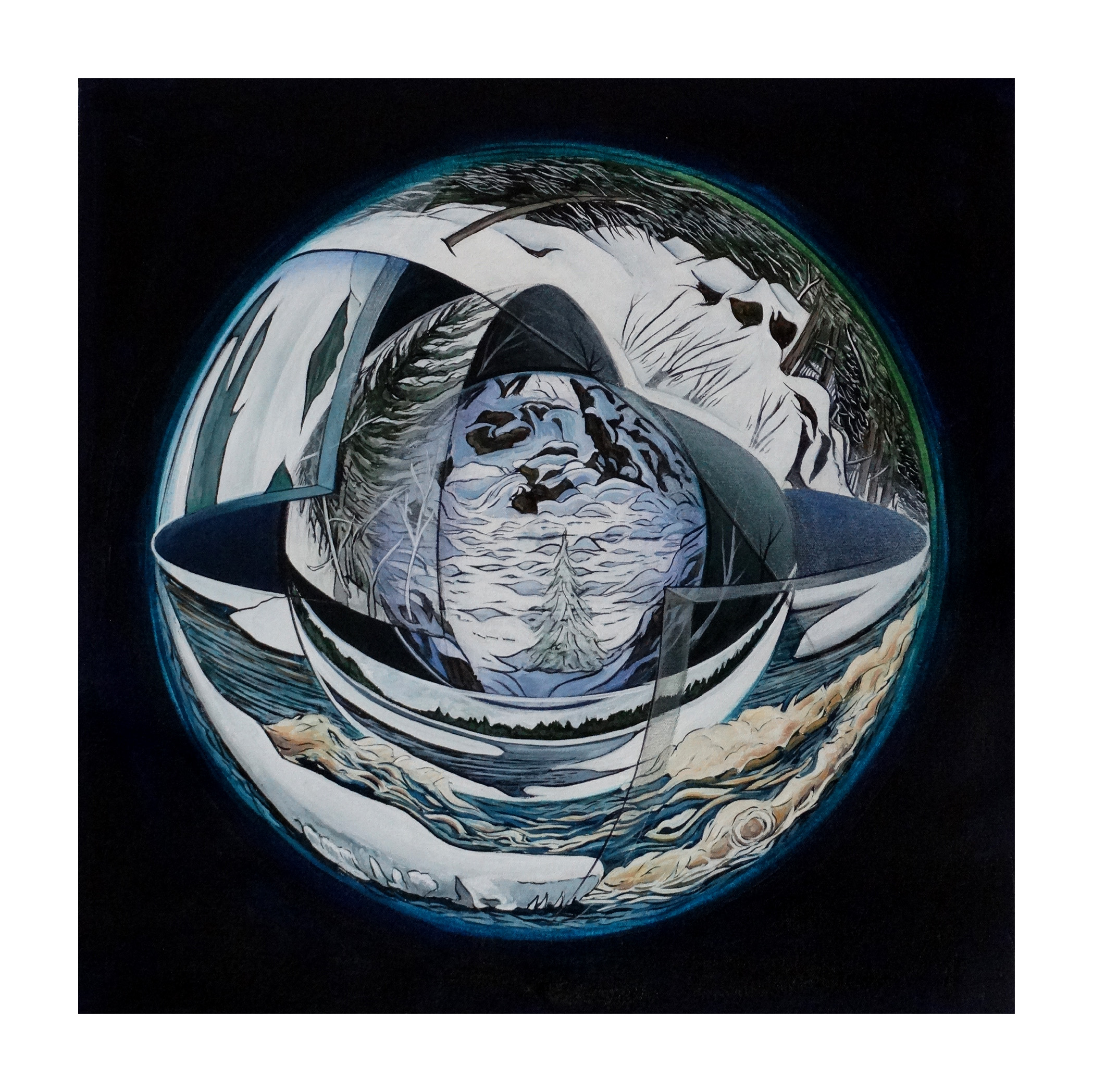
biosphere8