An Aversion to Heat

I’ve found myself, lately, inextricably rooted in a mindset of cynicism that I think may be due to being in the heat of these southern climes where I am temporarily residing.

Cynicism is not foreign to my nature by any means but it seems to have assumed a stronger grip on my thought processes these days as I endure temperatures in the 80’s and 90’s. For example, when I see all the elderly individuals down here, plodding along on their walkers or holding up traffic in their golf carts, rather than commiserate, I am drawn to thinking that their migration to these sunny climes is but preparation for their soon to experience date with the crematory oven.

And then there’s the ubiquitous border patrol’s insidious presence on the roadways seeking to intercept any illicit Hispanic migrants who might be crossing the border looking for honest work. And this is not to mention the legions of homeless individuals on bicycles, pulling wagons containing all of their worldly belongings, sleeping in the parks while being ignored by a government adverse to social provision of any sort.

Anyway, I’m thinking it may just be the heat that has me so off-center; it may be time to proceed north to cooler climes and a more compassionate perspective.

meditationdevice11

Populism

I’ve been trying to make sense of the term populism which has been in the news so much lately. I’ve always thought being popular meant acceptance by a large segment of people-the populus, I guess.

I’m familiar with the idea of popular culture: art forms like comic books, easy listening music, feel-good movies, reality TV and such that are easily accessible to many. On the surface, it sure seems like popularity ought to be a good thing.

But, whereas one might suppose populism might be about bringing everyone together in support of the common good, what it appears to really be about is dividing and conquering. I guess, when it comes down to it popularity generates the ‘Other’. In popular culture the ‘Other’ is the antiquated or out of style, in religion, those on the wrong path. In the political realm a populist seeks to gain popular support often times by demonizing those less virtuous than his own constituency, who are characterized as in opposition to the traditions and values so dear to his followers.

Given the disparate values –realities, really-of so many, I guess it’s probably unreasonable to expect wide spread agreement about political or religious issues. Still, it does seem reasonable to assume that everyone should be in favor of seeking the common good.

near vilnius 3

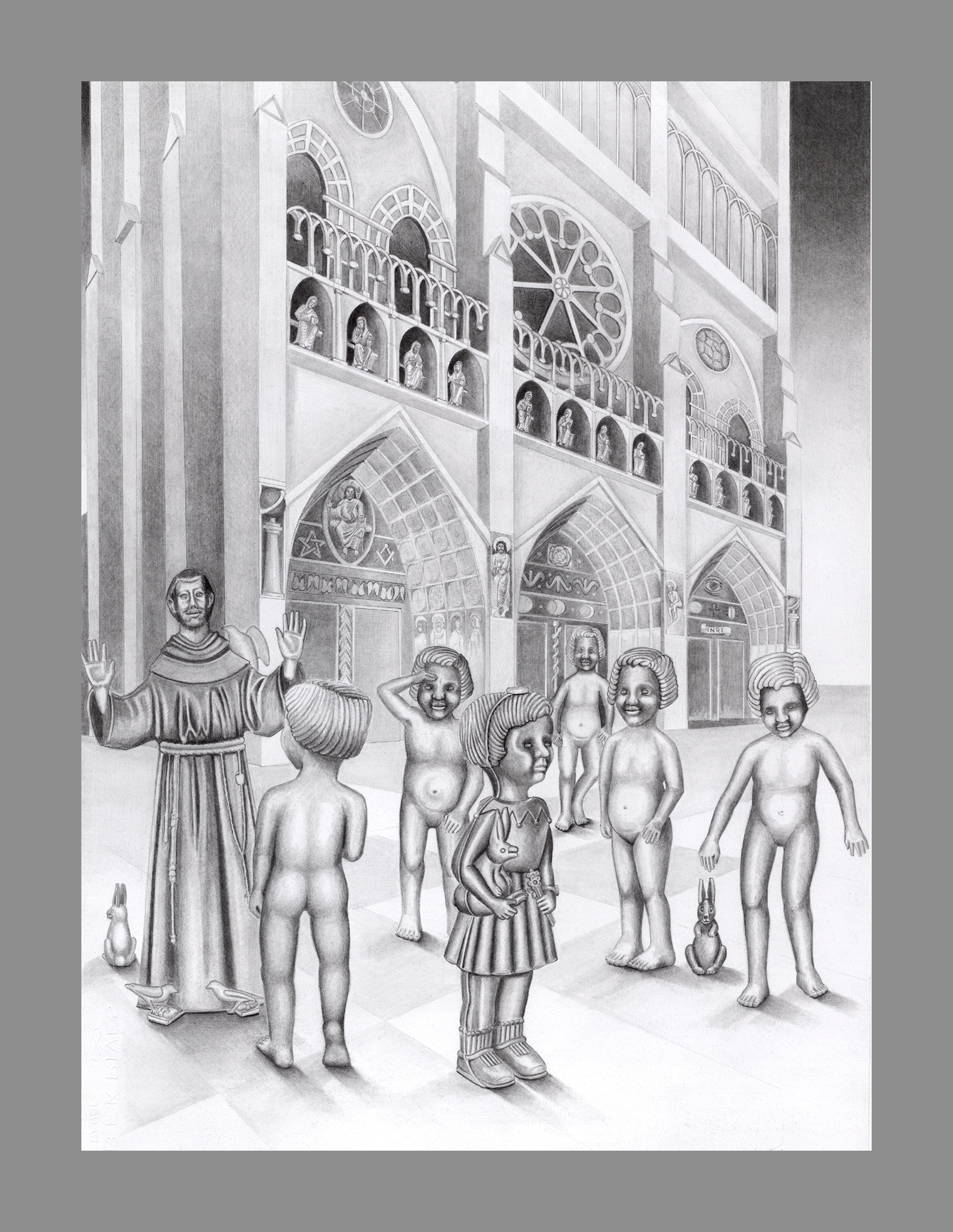
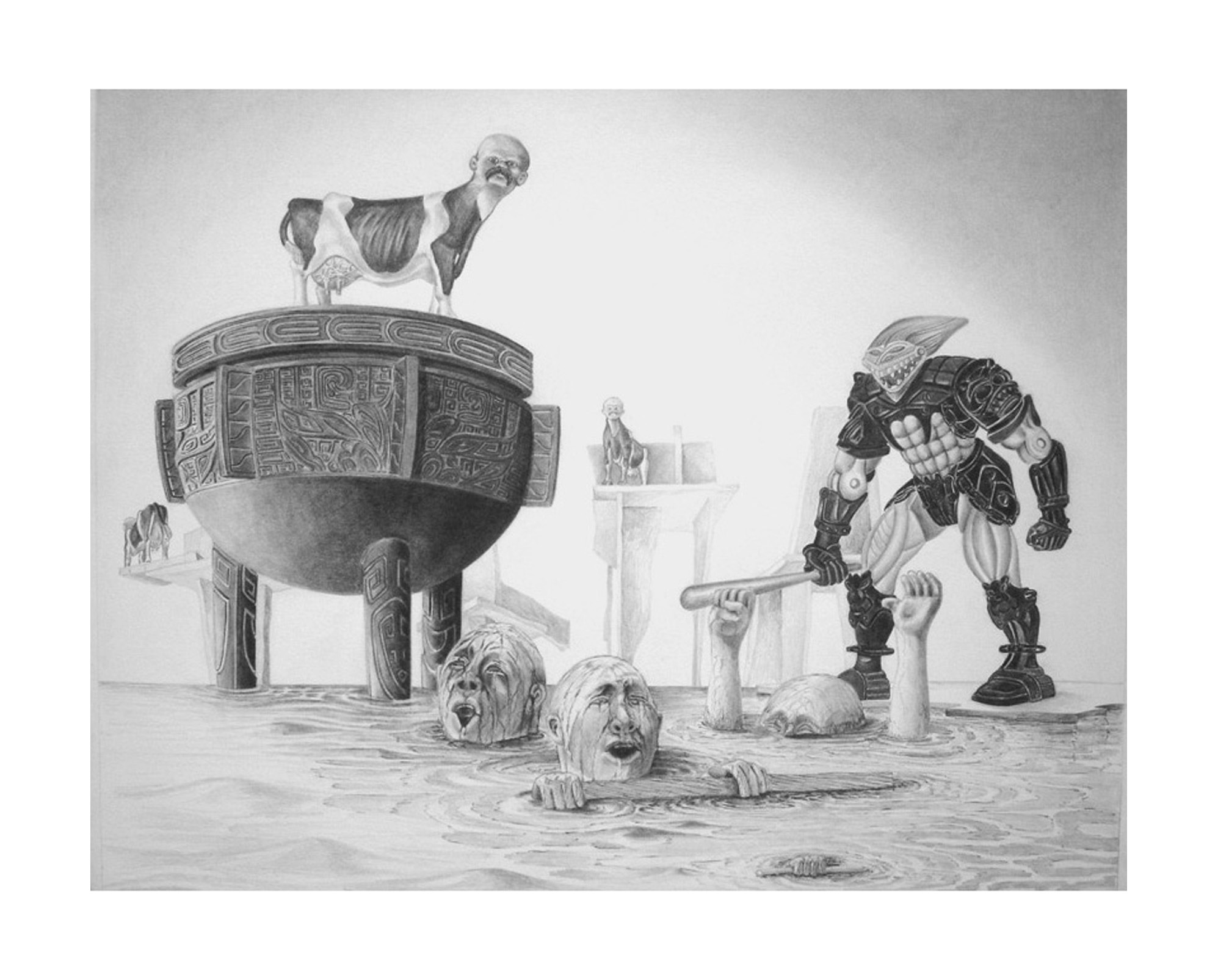
The Seven Deadly Sins

I’ve been thinking about the goings-on in the political realm, lately, in terms of the seven deadly sins the fourth century church fathers saw fit to impose on their faithful practitioners. I suppose those early church leaders may have been thinking of the moral health of the people, at least to some degree, while imposing a social order that was disregarded under penalty of mortal oblivion.

It appears the current flock are not as concerned about sinful mortality as they might have been centuries ago considering what appears to be widespread desires for more, more, more, material excesses and gluttonous consumption while basking in the vegetative state.

But, it seems to me these indiscretions are pretty minor compared to the behaviors of some of those seeking public office these days. What it all appears to come down to is hubris of monumental dimension, which, if we are to give credence to Dante, who gave this issue considerable thought, placed the prideful in the deepest bowels of his Inferno. Not scary anymore, I guess.

Oneness

I’ve been trying to make sense, lately, of the philosopher Arthur Schopenhauer’s concept of ‘Will’. As far as I can tell, rather than connoting the generally held understanding of the term as having to do with conscious desire, mood swings or self-awareness, ‘Will’ for Schopenhauer is the non-living force, the undifferentiated, timeless, space less, noumenal Oneness from which all differentiated phenomena (including us) is manifest. This means, I guess, that we all share a common origin that may account for our moral proprieties, compassion and fellow-feeling.

Well, as I was contemplating this recently during a three hour flight, the beauty of the idea really hit home. I found myself in an aisle seat in the last plane row right next to the rest rooms. After drinks were served a flow of humanity descended upon me, enveloping me in what I can only imagine must be very much like the primordial ‘Will’ in which we all swam and to which we will return.

I must say the experience was a striking realization of how connected we sentient beings are, at least in a very general sense; so simpatico, comfortable in our oneness as long as we don’t individuate too much. It was actually fairly pleasant in remembrance until I discovered I had acquired an unfamiliar germ that caused me a bit of distress.

existential angst

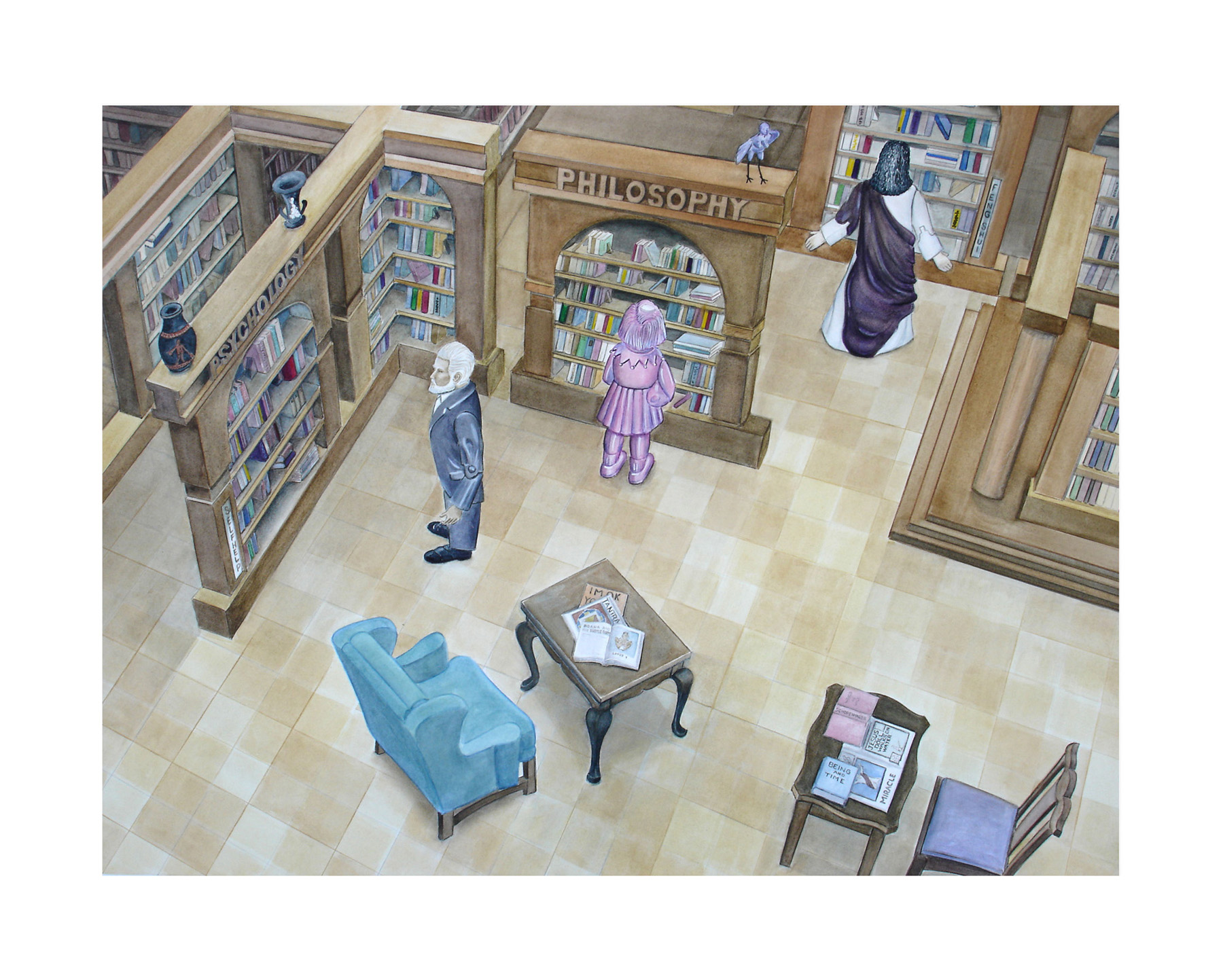
Philosophical Thoughts

A couple of recent upheavals in my otherwise serene existence have me thinking about the wisdom of the ancient Stoics and the idea of balancing my placid life with a daily dose of worst-case scenario.  According to the philosopher Epictetus such a position will ensure than while one may be sick, yet will be happy, in peril yet happy.

One might complain, I suppose, that waiting for the roof to fall in isn’t exactly an optimal philosophical perspective, but I have to hand it to those old Stoics as well as Cynics and Epicureans, that their ideas might have been less than perfect but their concern for living life meaningfully and well was above reproach.

Which is more than can be said for certain later philosophical thinkers; apparently, there were individuals, more than a few, I guess, who, in order to catch the attention of their peers, wrote in a most obscure manner employing a convoluted prose filled with misleading, faulty logic and leading to pseudo-profundities having little to nothing to do with living life.

This information has been quite an eye-opener for me, considering the difficulty I’ve had over the years trying to make sense of certain philosophical readings. Not being a scholar, myself, I’m not absolutely sure whether my difficulties are a result of misdirection or simply a lack of subtlety of understanding; nuances, I think, are often lost on me.

Nevertheless, I’m going to revisit the ancients. I’m pretty confident that what they sought, that is the nature of our human existence, carries the kind of meaning important to me.

greek philosophers

Winter Musings

Winter in the northern climes, where I now am, demands one’s attention. Temperatures can be frigid, even gelid; if one is inclined toward optimism, at least fresh. Outdoor activities usually require a reasonably vigorous energy output just to keep up body heat. Walking about can be treacherous; light snow cover over ice almost begs for a twisted knee or sprained ankle. When the wind comes up out of the north it can take one’s breath away. I could go on and on, but the fact is I love winter: the beauty of the high visual contrasts in the landscapes, the deep shadows and black woods on dominating white snow and the clean, pure cold that eradicates the rotting vegetation along with those inhospitable microbes the summer and fall have produced.

Anyway, I was thinking about the analogic connections often made between seasonal progression and animal life cycle: Spring is often associated with youthful exuberance (not to mention fecundity); Summer is thought of as a time of maturation and maximal productivity- a fully realized adulthood; Fall is often seen as a time of rest and reflection, of old age and remembrance of what has been. What, then, does that make winter? I would rule against death because I don’t believe one can be aware of being dead. Maybe dormancy is a bit like the concept of purgatory; not viable as far as I can see.

So, I guess that leaves winter as the after-life. I know hell-fires are a common conception of what one might encounter in the least favorable after-life scenario, but certain medieval thinkers indicated a belief that ice and cold will be a part of one’s final sufferings. So, if winter is Hell and winter is where I eventually end up in perpetuity, I’m thinking it may not be such a bad thing.

meditationdevice10

The Nature of Love

I was thinking the other day how emotions sometimes creep up on a person, how they seem to come out of nowhere. Suddenly one finds herself overwhelmingly attracted to someone for no apparent good reason; logic doesn’t seem to play a part in what might be called, I suppose, love at first sight, but may be better described as ‘animal attraction’.

If the object of one’s desire shows any sort of mutual interest things can get pretty complicated.  When one finds herself deeply in love it often comes as a revelation; one moment content living the single life and suddenly emotionally connected to another.  Such a situation can considerably upset one’s well-established independent life-style; tensions will invariably emerge and a re-evaluation of the situation will more than likely be necessary.

At this point a not insignificant dilemma has developed; one must weigh the idea of returning to the peacefulness of single existence against the occasional elation and/or camaraderie of the relationship.  The realization that both parties must assume a stance of ‘give and take’ if the union is to be successfully sustained will bring to light the personal differences the individuals bring to the table.

And, those differences can be significant.

lossofinnocense3

Mandalas to Order

An idea has come to me lately that, perhaps, the problem I have with meditative practice has to do with not having an appropriate focus to immerse myself in to. I’m pretty sure that if I’m ever to build regular periods of meditation into my daily goings-on I’m going to need a more meaningful target on which to concentrate.

As much as I love the Buddhist mandalas, I find it difficult to fully appreciate the iconography. The multiplicity of various Buddha manifestations and bodhisattvas and their relationships and stories, although colorful and interesting just don’t work for me from a meditative stand point.

But, the idea of sitting before one of these large circular structures, concentrating on ‘entering’ and moving through the various protective layers to reach a meaningful center has a lot of appeal. So, I’m thinking that maybe a more appropriate mandala for those of us not steeped in a religious tradition might contain aspects of our familiar environs: imagery that we non-religious can relate to. Those of us desiring a regular time of introspection who happen to live in rural areas might relate better to landscape elements; city dwellers in need of times of reflex ion might appreciate urban elements in their mandalas.

Well, I’ll see what I can come up with; let me know what you think.

meditationdevice9

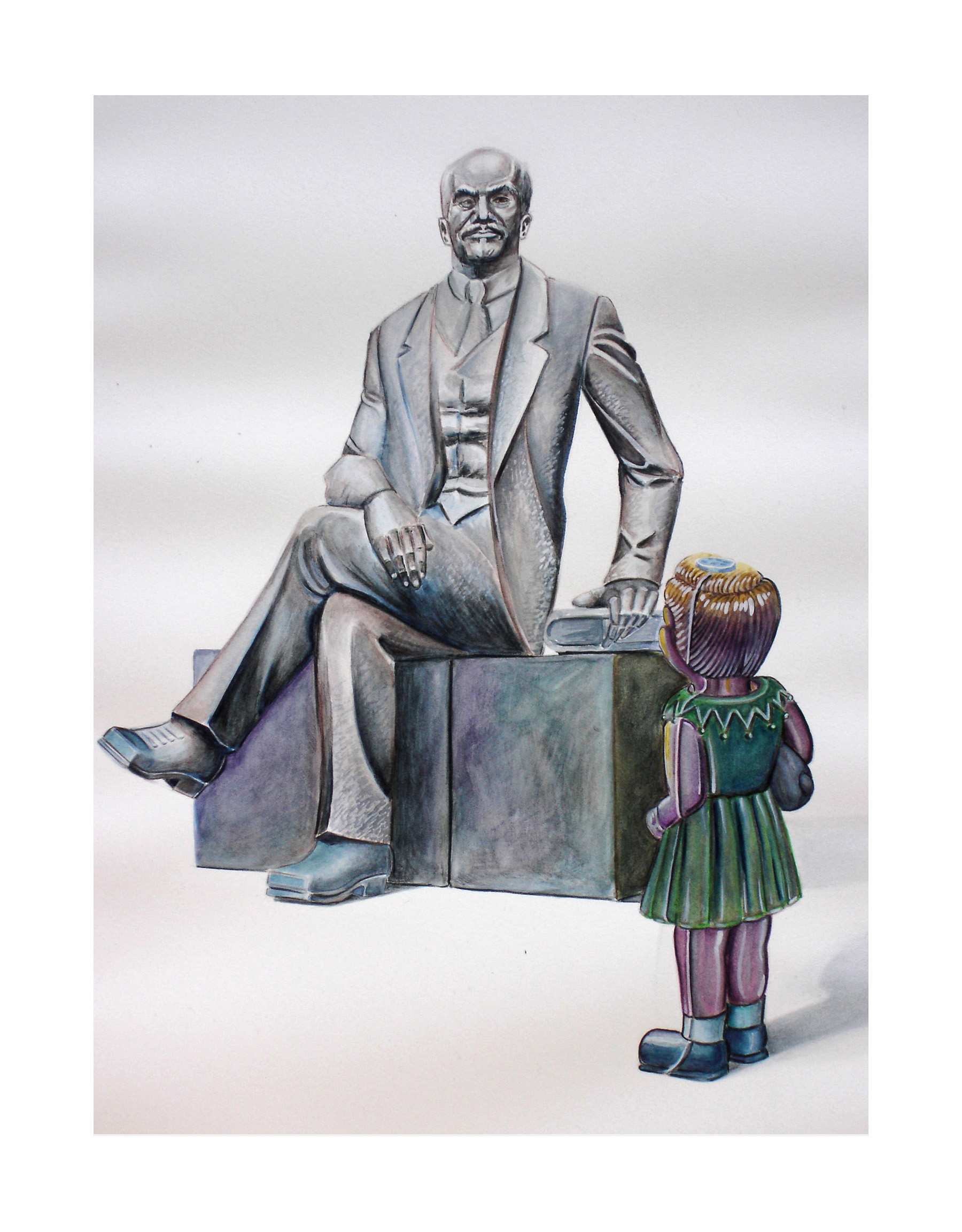
Delusions of Well-Being

According to the Romanian philosopher Emil Cioran a person would be better off not to have been born. He determined suffering is the rule in life and there is absolutely nothing anyone can do about it. All actions, he says, are or will be cause for regret.

The notion of well-being for Emil is an illusion that many people will harbor off and on during their lives but will in the end be unable to sustain. Apparently Emil thinks it would be better to be, now, where he was before he was born-which is where he must be since he died in 1995.

I guess Emil spent most of his life under a dark cloud; his mother told him at one time, had she known he was going to be so unhappy she would have aborted him. The notion of the accidental nature of his existence seems to have been somewhat of a lift, leading him to the idea that, potentially, suicide is always a possibility.

Emil’s lack of empathy for his fellow man led him to embrace the totalitarian politics of World War II Europe; no doubt he has to be seen as the quintessential misanthrope. Still, he had good friends, companionship and wrote quite beautifully in a lyrical style. He was an artist, really.

It makes me wonder if there wasn’t a certain Stoic resignation in Emil’s behavior; perhaps writing all those negatives provided the opportunity to not have to think about them so much.

eithoror3

The Absolute

I’ve been thinking lately, about the idea of the Absolute, you know, in an abstract sense: the Origin of all, the monad, the axis mundi, the metaphysical first cause; God, if you will.

I have this notion that if one embraces the idea of an existing absolute with enough conviction they may very well realize the presence of such an entity, perhaps, even, on a daily basis. In which case, one questioning such an existence would have to concede that for the believing individual the Absolute does, indeed, exist.

I suppose if I were to assume the position of the doubter, I could argue our believer is mistaken and has deluded herself into believing something that isn’t real, that simply doesn’t exist. But, since proof of such a position is not to be obtained, the ensuing argument would be futile, because the fact is the believer believes absolutely in the Absolute. And, as vehemently as I might point out the lack of empirical or logical justification for their belief in an Absolute the more vehemently I will become absolutely convinced I’m right in my denial of the Absolute.

But, then, doesn’t my belief that absolutely there can be no Absolute become a belief in an Absolute?

I wonder if that’s the game the pre-suppositional apologists play.

deideivis2